January 29, 2026
Les Ballets Trockadero de Monte Carlo

Les Ballets Trockadero de Monte Carlo
We're so glad you're here! Please select the tab links below to enjoy all of the program content.
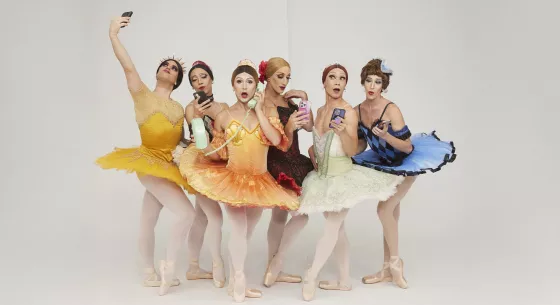
Top image: Les Ballets Trockadero de Monte Carlo. Photo © Zoran Jelenic.
Duration: Approximately 135 minutes, including two 15-minute intermissions.
Colette Adae, Holly Dey-Abroad, Heidi Kleine, Varvara Laptopova, Marina Plezegetovstageskaya, Moussia Shebarkarova, Olga Supphozova, Maya Thickenthighya, Gerd Törd, Minnie van Driver, Vera Vidludik, Tatiana Youbetyabootskaya, Blagovesta Zlotmachinskaya
Bruno Backpfeifengesicht, Jacques d’Aniels, Ronald Deaulin, Boris Dumbkopf, Nicholas Khachanfallenjar, Araf Legupski, Polykarp Legupski, Timur Legupski, Vyacheslau Legupski, Mikhail Mudkin, Yuri Smirnov, Pavel Törd, William Vanilla
Artistic Director: Tory Dobrin
Executive Director: Liz Harler
Associate Director: Isabel Martinez Rivera
Associate Artistic Director: Raffaele Morra
Production Manager: Shelby Sonnenberg
Duration: 33 minutes
Music: Pyotr Ilyich Tchaikovsky
Choreography After: Lev Ivanovich Ivanov
Costumes: Mike Gonzalez
Decor: Clio Young
Lighting: Kip Marsh
Swept up into the magical realm of swans (and birds), this elegiac phantasmagoria of variations and ensembles in line and music is the signature work of Les Ballets Trockadero. The story of Odette, the beautiful princess turned into a swan by the evil sorcerer, and how she is nearly saved by the love of Prince Siegfried, was not so unusual a theme when Tchaikovsky first wrote his ballet in 1877 — the metamorphosis of mortals to birds and visa versa occurs frequently in Russian folklore. The original Swan Lake at the Bolshoi Theatre in Moscow was treated unsuccessfully; a year after Tchaikovsky's death in 1893, the St. Petersburg Mariinsky Ballet produced the version we know today. Perhaps the world's best known ballet, its appeal seems to stem from the mysterious and pathetic qualities of the heroine juxtaposed with the canonized glamour of 19th century Russian ballet.
Benno: Jacques d’Aniels (friend and confidant to)
Prince Siegfried: Araf Legupski (who falls in love with)
Colette Adae (Queen of the)
Swans: Artists of the Trockadero (all of whom got this way because of)
Von Rothbart: Yuri Smirnov (an evil wizard who goes about turning girls into swans)
Duration: 9 minutes
Choreography After: Merce Cunningham
Taped Music: Andrew Franck
Live Music After: John Cage
Costumes: Ken Busbin
Lighting: Tricia Toliver
“In short, this generation has conceived an intensity of movement so great that it has not to be seen against something else to be known, and therefore, this generation does not connect itself with anything, that is what makes this generation what it is and that is why it is American, and this is very important in connection with portraits of anything.” — Gertrude Stein
A post modern dance movement essay.
Dancers: Heidi Kleine, Gerd Tord, Blagovesta Zlotmachinskaya
Musicians: Olga Supphozova and Boris Dumbkopf
Duration: 13 minutes
Music: Ludwig Minkus
Choreography After: Marius Petipa
Costumes: Mike Gonzalez
Lighting: Kip Marsh
The pas d’action from the second act of La Bayadère is a centerpiece of the wedding celebration between Gamzatti and Solor. It is a pas d’huit that includes variations for the principal couple as well as a section for corps de ballet. The celebration is a cruel and public spectacle in the Indian court, as Gamzatti is betrothed to Solar but knows that Solor is still in love with the temple dancer (Bayadère) Nikiya … the usual story. The entree, adagio, two solos, group dances and coda are filled with all manner of virtuosity with the peak of excitement being reached in the coda.
Gamzatti: Minnie van Driver
Solor: Jacques d’Aniels
Holly Dey-Abroad, Moussia Shebarkarova, Gerd Törd, Blagovesta Zlotmachinskaya, Roland Deaulin, Timur Legupski
Duration: 6 minutes
Music: Camille Saint-Saens
Costume: Mike Gonzalez
This solo, created for Anna Pavlova in 1905 would become, in later years, her signature dance — and perhaps the most famous solo in ballet. The Trockadero offers its own distinctive interpretation of the terminal fowl.
Dancer: Olga Supphozova
Duration: 28 minutes
Music: Ludwig Minkus
Choreography After: Marius Petipa
Staging: Elena Kunikova
Costumes and Decor: Mike Gonzalez
Lighting: Kip Marsh
Paquita is a superb example of the French style as it was exported to Saint Petersburg in the late 19th Century. Paquita was originally a ballet-pantomine in two acts, choreographed by Joseph Mazillier, to music by Ernest Deldevez. The story had a Spanish theme, with Carlotta Grisi (creator of “Giselle”) as a young woman who is kidnapped and saves a young and handsome officer from certain death. Premiering at the Paris Opera in 1846, the ballet was produced a year later in Russia by Marius Petipa. Petipa commissioned Ludwig Minkus, the composer of his two most recent successes (“Don Quixote” and “La Bayadère”) to write additional music in order to add a brilliant “divertissement” to Mazillier’s Paquita. Petipa choreographed for this a Pas de Trois and a Grand Pas de Deux in his characteristic style. These soon became the bravura highlights of the evening-to the point that they are the only fragments of Paquita that have been preserved. The dancers display a range of choreographic fireworks, which exploit the virtuoso possibilities of academic classical dance, enriched by the unexpected combinations of steps.
Ballerina and Cavalier: Varvara Laptopova With Mikhail Mudkin
Variations:
Variation 1: Tatiana Youbetyabootskaya
Variation 2: Minnie van Driver
Variation 3: Moussia Shebarkarova
Variation 4: Colette Adae
Variation 5: Varvara Laptopova

Welcome to another extraordinary season of dance and music at Northrop—a season we are proud to offer, inspired by your curiosity, energy, and commitment to making the arts a central part of life.
Rooted in the belief that the arts are essential to the human experience, Northrop is committed to cultivating intersections between performing arts and education—for all participants, now and for generations to come. This season, those intersections will be more vibrant than ever. We have curated performances that stretch boundaries, inspire reflection, and celebrate both innovation and tradition in equal measure.
You’ll see in this season’s lineup a range of world-class artists and ensembles—some of whom we know well, others who bring voices and perspectives new to our stage. Each program is selected not only for its artistic excellence, but also for its ability to provoke thought, open dialogue, and offer learning opportunities beyond the stage: workshops, pre-show discussions, community gatherings, and more. These elements are meant to deepen your experience, helping to illuminate context, process, and the living, breathing nature of creative work.
As part of the University’s teaching, research, and service mission, Northrop strives to be a catalyst—igniting transformation in each individual, inspiring positive change in our world. Through the rhythm of dance, the textures of music, and the shared moments among us in the audience, we hope you will find something that moves you, surprises you, and invites you to see the world just a little differently.
I invite you to join us not just as spectators, but as participants. Ask questions. Bring friends. Explore more. Share what you experience. We are honored to present this season, and even more honored to share it with a community that values what the arts offer—beauty, challenge, joy, connection.
Thank you for being here and supporting Northrop. Together, let us make Northrop’s 97th season remarkable.
With gratitude,
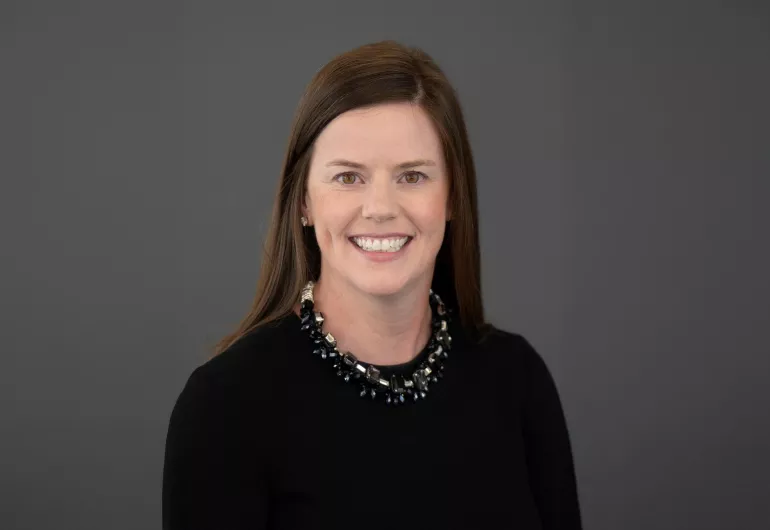
Kari Schloner
Executive Director
Dear Friends,
On behalf of the Northrop Advisory Board, it is my great pleasure to welcome you to Northrop, the University of Minnesota’s historic home for the performing arts. For almost a century, Northrop has been a place where artistry, learning, and community converge—a stage not only for extraordinary performances but also for dialogue, discovery, and inspiration.
Each season, Northrop presents world-class dance, music, and other performances, and serves as a gathering place for students, faculty, and community members alike. These experiences enrich our campus and our state, fostering the creativity, curiosity, and cultural understanding that are so vital in today’s world.
Your presence here affirms the importance of the arts in higher education and in civic life. We invite you to be more than an audience member—become an advocate for the arts. Share your experiences, bring new friends to Northrop, and help us amplify the voices of artists and thinkers who inspire us to see the world anew.
We also ask you to consider a gift to Northrop. Your financial support ensures that future generations can access the transformative power of the arts, that students can encounter artists in their classrooms as well as on our stage, and that our community can continue to gather here for moments that move and unite us.
Thank you for being part of Northrop’s story. Together, we can sustain this remarkable institution and secure its role as a cultural cornerstone for decades to come.
With gratitude,
Kelly McQueen, Chair, Northrop Advisory Board

Les Ballets Trockadero de Monte Carlo. Photo © Zoran Jelenic.
The Trocks, as they are affectionately known, soon garnered critical acclaim and cultural cachet in publications with major reach, such as The New Yorker, The New York Times, and the Village Voice. By mid-1975, the company’s inspired blend of dance knowledge, comedy and athleticism, moved beyond New York City when the Trocks qualified for the National Endowment for the Arts Touring Program, hired a full-time teacher and ballet mistress and made its first extended tours of the United States and Canada. Packing, unpacking and repacking tutus and drops, stocking giant-sized toe shoes by the case and running for planes and chartered buses all became routine parts of life. They have been going non-stop ever since, appearing in 43 countries and more than 660 cities worldwide. The company branched out from the vibrant live performances and expanded its scope with an education program in 2016 and the Choreography Institute in November 2023. With so much activity, the Trocks have garnered a dedicated fan base, repeating performances in countries year after year and continuing to add first-time engagements as the company enters its 50th anniversary season.
Interest and accolades have accumulated over the years. The Trocks have proved an alluring documentary subject, featured in an Emmy-winning episode of the acclaimed British arts program “The South Bank Show”; the 2017 feature film “Rebels on Pointe”; and most recently “Ballerina Boys,” which aired on PBS “American Masters” in 2021. Several of the Trocks’ performances at the Maison de la Danse in Lyon, France were also aired by Dutch, French and Japanese TV networks. Other television appearances have ranged from a Shirley MacLaine special to the Dick Cavett Show, “What’s My Line?,” “Real People” and “On-Stage America.” The dancers also have the distinction of appearing with Kermit and Miss Piggy on “Muppet Babies.
The company’s awards include a prestigious UK Critics Circle National Dance Award for Best Classical Repertoire (2007) and nomination for Outstanding Company (2016), the Theatrical Managers Award (2006, UK); and the Positano Award for Excellence in Dance (2007, Italy). The company has appeared in multiple galas and benefits over the years, including at the 80th anniversary Royal Variety Performance to aid the Entertainment Artistes’ Benevolent Fund in December 2008, which was attended by members of the British Royal family, including the now King Charles III.
The original concept of Les Ballets Trockadero de Monte Carlo has not changed. It is a company of professional male dancers performing the full range of ballet and modern dance repertoire, including classical and original works in faithful renditions of the manners and conceits of those dance styles. The comedy is achieved by incorporating and exaggerating the foibles, accidents and underlying incongruities of serious dance. The fact that muscular, athletic bodies dance all of the parts, delicately balancing on toes as swans, sylphs, water sprites, romantic princesses and angst-ridden Victorian ladies, enhances the appreciation for the effort, timing, stamina and precision required, delighting die-hard ballet fans and newcomers alike.
Looking to the future, the Trocks are making plans for new commissions, new debuts and new audiences, while continuing the company’s original mission: to bring the pleasure of dance to the widest possible audience.
The company will, as they have for 50 years, “keep on Trockin’.”
Les Ballets Trockadero de Monte Carlo
Box 1325, Gracie Station, New York City, New York 10028
Moussia Shebarkarova and Vyacheslau Legupski: Vincent Brewer
Heidi Kleine and Polykarp Legupski: Harrison Broadbent
Blagovesta Zlotmachinskaya and Mikhail Mudkin: Raydel Caceres
Olga Supphozova and Yuri Smirnov: Robert Carter
Vera Vidludik and Nicholas Khachafallenjar: A.J. David
Gerd Törd and Pavel Törd: Matias Dominguez Escrig
Tatiana Youbetyabootskaya and Araf Legupski: Andrea Fabbri
Maya Thickenthighya and Roland Deaulin: Peter Gwiazda
Minnie van Driver and William Vanilla: Liam Vincent Hutt
Marina Plezegetovstageskaya and Jacques d’Aniels: Antonio Lopez
Holly Dey-Abroad and Bruno Backpfeifengesicht: Felix Molinero del Paso
Colette Adae and Timur Legupski: Jake Speakman
Varvara Laptopova and Boris Dumbkopf: Takaomi Yoshino
Artistic Director : Tory Dobrin
Executive Director: Liz Harler
Associate Director: Isabel Martinez Rivera
Associate Artistic Director: Raffaele Morra
Production Manager: Shelby Sonnenberg
Lighting Supervisor: Isaac Castillo
Wardrobe Supervisor : Sam Barao
Education Manager: Roy Fialkow
Digital Engagement Manager: Anne Posluszny
Company Advancement Associate: MaryBeth Rodgers
Development Consultant: LG Capital for Culture
Costume Designers: Ken Busbin, Jeffrey Sturdivant
Stylistic Guru: Marius Petipa
Orthopedic Consultant: Dr. David S. Weiss
Photographer: Zoran Jelenic
Program subject to change without notice.
facebook.com/thetrocks
Instagram: @lesballetstrockadero


This activity is made possible by the voters of Minnesota through a Minnesota State Arts Board Operating Support grant, thanks to a legislative appropriation from the Arts and Cultural Heritage Fund.
Les Ballets Trockadero de Monte Carlo, Inc. is a nonprofit dance company chartered by the State of New York. Martha Cooper, president; Jenny Palmer, vice-president; Mary Lynn Bergman-Rallis, secretary; Amy Minter, treasurer. James C.P. Berry, Martie Barylick, Tory Dobrin, Elizabeth Harler Stephens.
Special Thanks to our Major Institutional Supporters: Arison Arts Foundation, The Howard Gilman Foundation, Tiger Baron Foundation, The Max and Victoria Dreyfus Foundation, Rallis Foundation, Shubert Foundation, The Harkness Foundation for Dance and the NYU Community Fund.
Thanks to our local and state cultural funding agencies for their contributions to our work in New York with support, in part, by public funds from the New York City Department of Cultural Affairs in partnership with the City Council; and the New York State Council on the Arts with the support of the Office of the Governor and the New York State Legislature. Thanks to our Board of Directors and individual supporters for their generous contributions that make our nonprofit mission possible.
Thanks to our Board of Directors and individual supporters for their generous contributions that make our nonprofit mission possible.
Makeup provided by
Music for ballets on the program is conducted by Pierre Michel Durand with the Czech Philharmonic Chamber Orchestra, Pavel Prantl, Leader
Booking Inquiries:
Liz Harler
Executive Director
liz@trockadero.org
At Northrop, we believe in connecting great artists and ideas with our community and to a new generation of audiences. Your gift helps make memorable arts experiences possible by supporting extraordinary performances and new arts commissions, and helping ensure accessibility to everyone through live-streamed programming, outreach to diverse communities and subsidized student tickets. Our Friends are at the center of Northrop’s biggest ideas and brightest moments on stage.
Become a Friend of Northrop today!
Ways to Give:
To learn more about supporting Northrop please contact:
Cynthia Betz
betzx011@umn.edu or 612-626-7554
*Emeritus
The Northrop Advisory Board is committed to the growth and awareness of Northrop’s mission, vision, and the continued future of presenting world-class dance and music in our community. If you would like more information about the advisory board and its work, please contact Cynthia Betz, Director of Development, at 612-626-7554 or betzx011@umn.edu.
With the restoration and reinstallation of Northrop’s Aeolian-Skinner Opus 892 organ, a group of dedicated volunteers now partner with Northrop for the awareness, success, and growth of organ programming and education. The Northrop Organ Committee features volunteers who are help with advocacy, network building, relationship development, and fundraising to help sustain and build Northrop’s Pipe Organ Music Series and other community events.
The Northrop Campus & Community Council acts as a resource for Northrop’s future success and growth, ensuring that Northrop builds relationships with and engages the communities where we live, learn, and work. This group of committed volunteers helps Northrop connect with new audiences and advises on programming that reflects the diverse communities we serve.
A special thank you to our patrons whose generous support makes Northrop's transformative arts experiences possible. Make your mark on Northrop's future by becoming a Friend today, learn more by visiting Northrop's Give page.
We gratefully acknowledge the support from the Anna M Heilmaier Charitable Foundation, Americans for the Arts/National Relief Fund, Curtis L. Carlson Family Foundation, City of Minneapolis, Minnesota State Arts Board, New England Foundation for the Arts, United States Artists, hospitality partner the Graduate Hotel Minneapolis, and event sponsors PNC Bank and RBC Wealth Management.
The Heritage Society honors and celebrates donors who have made estate and other planned gifts for Northrop at the University of Minnesota.
*Deceased
Thank you to the generous donors who continue to support programming for Northrop’s beloved Aeolian-Skinner Organ. It is because of you that this magnificent instrument’s voice will be enjoyed by many for years to come.
This season’s listing is current as of 12/12/25
Please contact Matthew Keefe at keefe175@umn.edu if you have any corrections or questions.