
We're so glad you're here! Please select the tab links below to enjoy all of the program content.
Top image: Paul Taylor Dance Company members in Pam Tanowitz's “Messengers, Maidens and the End of Something Else”. Photo © Ben McKeown.

Maria Ambrose and John Harnage in Paul Taylor’s “Brandenburgs.”
Photo © Ron Thiele.
Duration: Approximately 125 minutes with two 15-minute intermissions.
The taking of photographs and the use of recording devices are strictly prohibited. Program and casting are subject to change. Latecomers will be seated only during intermissions. Please silence all mobile devices during the performance.
“Brandenburgs”
(First performed in 1988)
Duration: 24 minutes
Music: Brandenburg Concertos No. 6 (movements 1 and 2) and No. 3 by Johann Sebastian Bach
Choreography: Paul Taylor
Costumes: Santo Loquasto
Lighting: Jennifer Tipton
Performers:
John Harnage, Madelyn Ho, Lee Duveneck, Alex Clayton, Devon Louis, Jessica Ferretti, Austin Kelly, Kenny Corrigan, Gabrielle Barnes
Original production made possible in part by contributions from the National Endowment for the Arts, The Wallace Foundation, The Andrew W. Mellon Foundation and The Ida and William Rosenthal Foundation, Inc.
Preservation made possible by Elise Jaffe and Jeffrey Brown and contributions to the Paul Taylor Repertory Preservation Project with support from the National Endowment for the Arts.
Intermission — 15 Minutes
“Messengers, Maidens and the End of Something Else”
(First performed in 2026)
Duration: 21 minutes
Music: “Death and the Maiden” by Franz Schubert
Choreography: Pam Tanowitz
Set: Sarah Crowner
Costumes: Harriet Jung and Reid Bartelme
Lighting: Brandon Stirling Baker
Assistant to the Choreographer: Maile Okamura
Performers:
Lee Duveneck, Alex Clayton, Devon Louis, John Harnage, Jessica Ferretti, Emmy Wildermuth, Elizabeth Chapa, Patrick Gamble
This work is co-commissioned by ADF with support from the Doris Duke/SHS Foundations Award for New Works, and made possible by Stephen Kroll Reidy and the Dancemaker Fund.
This project is also supported in part by an award from the National Endowment for the Arts, and by the New York State Council on the Arts with the support of the Office of the Governor and the New York State Legislature.
Intermission — 15 Minutes
“No Longer Silent”
(Company Premiere)
Duration: 33 minutes
Music: “Ogelala” (Ballettmysterium) Op. 53 by Erwin Schulhoff
Choreography: Robert Battle
Set: Mimi Lien
Costumes: Fritz Masten
Lighting: Nicole Pearce
Staging: Marlena Wolfe
Performers:
Madelyn Ho, Kristin Draucker, Lee Duveneck, Alex Clayton, Devon Louis, John Harnage, Jada Pearman, Jessica Ferretti, Austin Kelly, Kenny Corrigan, Gabrielle Barnes, Emmy Wildermuth, Elizabeth Chapa, Payton Primer, Caleb Mansor, Patrick Gamble
Premiered by The Juilliard School in 2007.
Support for the Taylor Company’s staging of “No Longer Silent” made possible by Johanna Weber and by Carol Weil. Additional support from Bud Shulman and Amy Newman.

Alex Clayton and Company in Robert Battle's "No Longer Silent".
Photo © Erin Baiano.
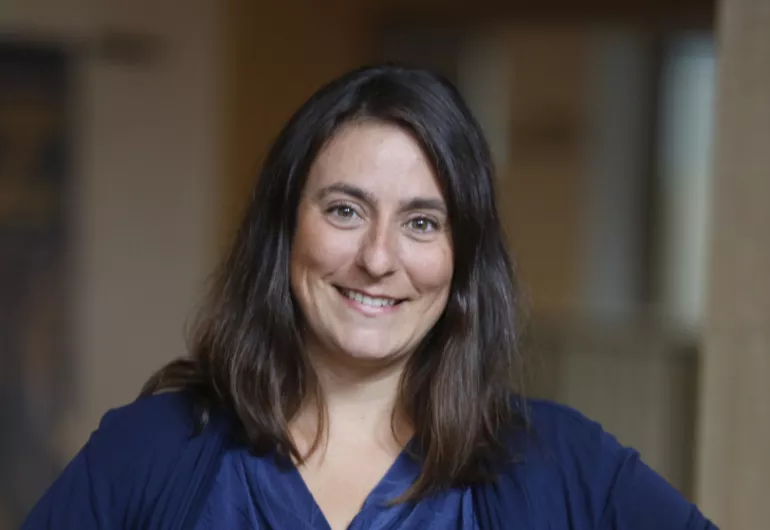
Welcome from the Executive Director
Welcome to another extraordinary season of dance and music at Northrop — a season we are proud to offer, inspired by your curiosity, energy and commitment to making the arts a central part of life.
Rooted in the belief that the arts are essential to the human experience, Northrop is committed to cultivating intersections between performing arts and education — for all participants, now and for generations to come. This season, those intersections will be more vibrant than ever. We have curated performances that stretch boundaries, inspire reflection and celebrate both innovation and tradition in equal measure.
You’ll see in this season’s lineup a range of world-class artists and ensembles — some of whom we know well, others who bring voices and perspectives new to our stage. Each program is selected not only for its artistic excellence, but also for its ability to provoke thought, open dialogue and offer learning opportunities beyond the stage: workshops, pre-show discussions, community gatherings and more. These elements are meant to deepen your experience, helping to illuminate context, process and the living, breathing nature of creative work.
As part of the University’s teaching, research and service mission, Northrop strives to be a catalyst — igniting transformation in each individual, inspiring positive change in our world. Through the rhythm of dance, the textures of music and the shared moments among us in the audience, we hope you will find something that moves you, surprises you and invites you to see the world just a little differently.
I invite you to join us not just as spectators, but as participants. Ask questions. Bring friends. Explore more. Share what you experience. We are honored to present this season, and even more honored to share it with a community that values what the arts offer — beauty, challenge, joy and connection.
Thank you for being here and supporting Northrop. Together, let us make Northrop’s 97th season remarkable.
With gratitude,
Kari Schloner
Executive Director
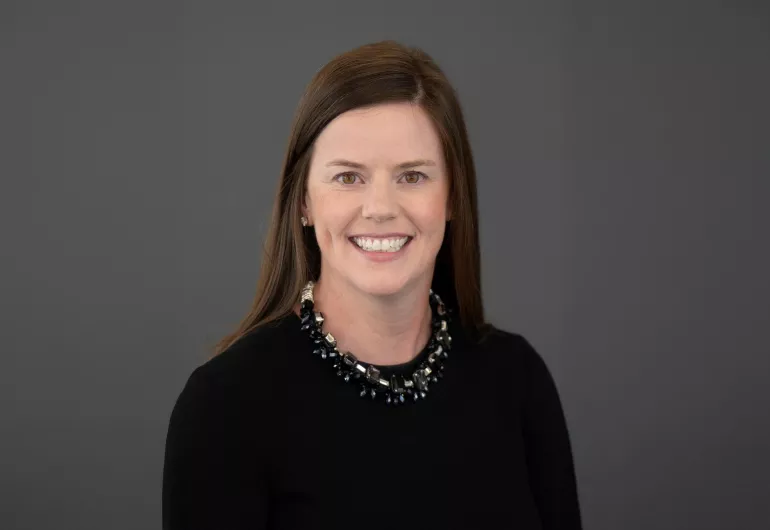
Welcome from the Advisory Board Chair
Dear Friends,
On behalf of the Northrop Advisory Board, it is my great pleasure to welcome you to Northrop, the University of Minnesota’s historic home for the performing arts. For almost a century, Northrop has been a place where artistry, learning and community converge — a stage not only for extraordinary performances but also for dialogue, discovery and inspiration.
Each season, Northrop presents world-class dance, music and other performances, and serves as a gathering place for students, faculty and community members alike. These experiences enrich our campus and our state, fostering the creativity, curiosity and cultural understanding that are so vital in today’s world.
Your presence here affirms the importance of the arts in higher education and in civic life. We invite you to be more than an audience member — become an advocate for the arts. Share your experiences, bring new friends to Northrop and help us amplify the voices of artists and thinkers who inspire us to see the world anew.
We also ask you to consider a gift to Northrop. Your financial support ensures that future generations can access the transformative power of the arts, that students can encounter artists in their classrooms as well as on our stage and that our community can continue to gather here for moments that move and unite us.
Thank you for being part of Northrop’s story. Together, we can sustain this remarkable institution and secure its role as a cultural cornerstone for decades to come.
With gratitude,
Kelly McQueen, Chair, Northrop Advisory Board
Paul Taylor Dance Company
The Paul Taylor Dance Company is one of the world’s leading dance organizations, based in New York City and with vast international reach. Under the artistic direction of Michael Novak, together with the best dancers, choreographers, educators and creatives, the Company continues to innovate and transform the landscape of 21st-century dance performance and education. The Taylor Company was founded in 1954 by Paul Taylor (1930-2018), one of America’s most celebrated artists, whose work reflected his belief that dance can convey complex truths about the human experience.
The hallmark of the Company is the brilliance of its ever-expanding repertory. Of the 170 dances that exist within the canon (147 choreographed by Paul Taylor), many are hailed as among the greatest works of the 20th and 21st centuries. While celebrating these masterworks of the past, the Company invests heavily in the future of the art form, appointing Lauren Lovette as the Company’s first resident choreographer in 2022 and Robert Battle as the Company’s second resident choreographer in 2024. Dedicated to sharing dance and education with the broadest possible audience, the Taylor Company sustains a global presence through its robust touring programs. Since its first European tour in 1960, the Company has performed in more than 600 cities in 66 countries, representing the United States at arts festivals and touring extensively under the aegis of the U.S. Department of State.
With a vast new headquarters in Midtown Manhattan, Taylor Dance West, adding to its longtime downtown studios, Taylor Dance East, the Company under Novak is positioned to be a greater resource in New York City. Its three creative sites across the city — Lincoln Center for the annual performance season, Midtown for Company creation and training, and the Lower East Side for dance instruction and community engagement — together realize Novak's vision for multiple spaces across the city to connect with the world of Taylor. For more information, please visit the Paul Taylor Dance Company website.

Paul Taylor (Founding Artistic Director)
Paul Taylor is one of the most accomplished artists this nation has ever produced, helping shape and define America’s homegrown art of modern dance from the earliest days of his career as a choreographer in 1954 until his death in 2018. Having performed with Martha Graham’s company for several years, Taylor uniquely bridged the legendary founders of modern dance — Isadora Duncan, Ruth St. Denis, Ted Shawn, Doris Humphrey and Graham — and the dancemakers of the 21st century with whom he later worked. Through his initiative at Lincoln Center, began in 2015 — Paul Taylor American Modern Dance — he presented great modern works of the past and outstanding works by today’s leading choreographers alongside his own vast repertoire. He also commissioned the next generation of dancemakers to work with his renowned Company, thereby helping to ensure the future of the art form.
Taylor continued to win public and critical acclaim for the vibrancy, relevance and power of his dances into his 80s, offering cogent observations on life’s complexities while tackling some of society’s thorniest issues. While he often propelled his dancers through space for the sheer beauty of it, he more frequently used them to comment on such profound issues as war, piety, spirituality, sexuality, morality and mortality. If, as George Balanchine said, “there are no mothers-in-law in ballet,” then there certainly are dysfunctional families, disillusioned idealists, imperfect religious leaders, angels and insects in Taylor’s dances. His repertoire of 147 works covers a breathtaking range of topics, but recurring themes include the natural world and man’s place within it; love and sexuality in all gender combinations; and iconic moments in American history. His poignant looks at soldiers, those who send them into battle and those they leave behind prompted The New York Times to hail him as “among the great war poets” — high praise indeed for an artist in a wordless medium. While some of his dances have been termed “dark” and others “light,” the majority of his works are dualistic, mixing elements of both extremes. And while his work was largely iconoclastic, he also made some of the most purely romantic, most astonishingly athletic and downright funniest dances ever put on stage.
Paul Taylor was born on July 29, 1930 — exactly nine months after the stock market crash that led into the Great Depression — and grew up in and around Washington, D.C. He attended Syracuse University on a swimming scholarship in the late 1940s until he discovered dance through books at the university library, and then transferred to The Juilliard School. In 1954, he assembled a small company of dancers and began to choreograph. A commanding performer despite his late start in dance, he joined the Martha Graham Dance Company in 1955 for the first of seven seasons as soloist while continuing to choreograph for his own troupe. In 1959, he was invited to be a guest artist with New York City Ballet, where Balanchine created the “Episodes” solo for him.
Taylor first gained notoriety as a dancemaker in 1957 with “Seven New Dances.” Its study in non-movement famously earned it a blank newspaper review, and Graham subsequently dubbed him the “naughty boy” of dance. In 1962, with his first major success — the sunny “Aureole” — he set his trailblazing modern movement not to contemporary music but to baroque works composed two centuries earlier, and then went to the opposite extreme a year later with a view of purgatory in “Scudorama,” using a commissioned, modern score. He inflamed the establishment in 1965 by lampooning some of America’s most treasured icons in “From Sea To Shining Sea” and created more controversy in 1970 by putting incest and spousal abuse center stage in “Big Bertha.”
After retiring as a performer in 1974, Taylor turned exclusively to choreography, resulting in a flood of masterful creativity. The exuberant “Esplanade” (1975), one of several Taylor dances set to music by Bach, was dubbed an instant classic, and has come to be regarded as among the greatest dances ever made. In “Cloven Kingdom,” (1976) Taylor examined the primitive nature that lurks just below man’s veneer of sophistication and gentility. With “Arden Court,” (1981) he depicted relationships both platonic and romantic. He looked at intimacy among men at war in “Sunset” (1983); pictured Armageddon in “Last Look” (1985); and peered unflinchingly at religious hypocrisy and marital rape in “Speaking in Tongues” (1988). In “Company B,” (1991) he used popular songs of the 1940s to juxtapose the high spirits of a nation emerging from the Depression with the sacrifices Americans made during World War II. In “Eventide,” (1997) he portrayed the budding and fading of a romance. In “The Word,” (1998), he railed against religious zealotry and blind conformity to authority. In the first decade of the new millennium, he poked fun at feminism in “Dream Girls” (2002); condemned American imperialism in “Banquet of Vultures” (2005); and stared death square in the face in the Walt Whitman-inspired “Beloved Renegade” (2008). “Brief Encounters” (2009) examined the inability of many people in contemporary society to form meaningful and lasting relationships. In this decade, he turned a frightening short story into a searing drama in “To Make Crops Grow” and compared the mating rituals of the insect world to that of humans in the comedic “Gossamer Gallants.” Taylor’s final work,”Concertiana,” made when he was 87, premiered at Lincoln Center in 2018.
Hailed for uncommon musicality and catholic taste, Taylor set movement to music so memorably that for many people it is impossible to hear certain orchestral works and popular songs and not think of his dances. He set works to an eclectic mix that includes Medieval masses, Renaissance dances, baroque concertos, classical warhorses and scores by Debussy, Cage, Feldman, Ligeti and Pärt; Ragtime, Tango, Tin Pan Alley and Barbershop Quartets; Harry Nilsson, The Mamas and The Papas and Burl Ives; telephone time announcements, loon calls and laughter. Taylor influenced dozens of men and women who have gone on to choreograph — many on their own troupes — while others have gone on to become respected teachers at colleges and universities. And he worked closely with such outstanding artists as James F. Ingalls, Jasper Johns, Alex Katz, Ellsworth Kelly, William Ivey Long, Santo Loquasto, Gene Moore, Tharon Musser, Robert Rauschenberg, John Rawlings, Thomas Skelton and Jennifer Tipton. Taylor’s dances are performed by the Paul Taylor Dance Company and companies throughout the world, including the Royal Danish Ballet, Rambert Dance Company, American Ballet Theatre, San Francisco Ballet, Miami City Ballet and Alvin Ailey American Dance Theater.
As the subject of the documentary films “Dancemaker” and “Creative Domain” and as author of the autobiography “Private Domain” and Wall Street Journal essay “Why I Make Dances,” Taylor shed light on the mysteries of the creative process as few artists have. “Dancemaker,” which received an Oscar nomination in 1999, was hailed by Time as “perhaps the best dance documentary ever,” while “Private Domain,” originally published by Alfred A. Knopf, was nominated by the National Book Critics Circle as the most distinguished biography of 1987. A collection of Taylor’s essays, “Facts and Fancies,” was published by Delphinium in 2013.
Taylor received nearly every important honor given to artists in the United States. In 1992, he was a recipient of the Kennedy Center Honors and received an Emmy Award for “Speaking in Tongues,” produced by WNET/New York the previous year. He was awarded the National Medal of Arts by President Clinton in 1993. In 1995, he received the Algur H. Meadows Award for Excellence in the Arts and was named one of 50 prominent Americans honored in recognition of their outstanding achievement by the Library of Congress’s Office of Scholarly Programs. He is the recipient of three Guggenheim Fellowships and honorary Doctor of Fine Arts degrees from California Institute of the Arts, Connecticut College, Duke University, The Juilliard School, Skidmore College, the State University of New York at Purchase, Syracuse University and Adelphi University. Awards for lifetime achievement include a MacArthur Foundation Fellowship — often called the “genius award” — and the Samuel H. Scripps American Dance Festival Award. Other awards include the New York State Governor's Arts Award and the New York City Mayor's Award of Honor for Art and Culture. In 1989, Taylor was elected one of10 honorary members of the American Academy and Institute of Arts and Letters. Having been elected to knighthood by the French government as Chevalier de l'Ordre des Arts et des Lettres in 1969 and elevated to Officier in 1984 and Commandeur in 1990, Taylor was awarded France’s highest honor, the Légion d’Honneur, in 2000 for exceptional contributions to French culture.
Taylor left an extraordinary legacy of creativity and vision not only to American modern dance but to the performing arts the world over.

Michael Novak (Artistic Director)
Michael Novak is carving a profound mark in the world of dance. He is unwavering in his commitment to shepherd in a new era of expansion for the Paul Taylor Dance Company, driven by his passion for artistic innovation, inclusion and education. Before assuming his role as artistic director, Novak built an impressive career as a critically acclaimed Taylor dancer, hailed by The New York Times as “a marvel of plasticity and penetrating imagination.” In 2018, after eight years of performing with the Company, Paul Taylor appointed Novak as his successor, entrusting him with the responsibility of preserving and evolving the Company.
Under Novak’s direction, Taylor continues to be one of the world’s leading dance companies, with robust domestic and international touring; an annual season at Lincoln Center for the Performing Arts; an ever-expanding repertory that includes both Paul Taylor’s groundbreaking work alongside new choreographic voices to reflect contemporary themes and diverse perspectives; educational programs to inspire the next generation of dancers and dance advocates; and a recent expansion to new headquarters in Midtown Manhattan that offer greater resources to the creative community in New York City, the heart of the dance universe. The New York Times hailed his inaugural season as artistic director as “groundbreaking and inspirational.” In 2019, he partnered with Orchestra of St. Luke’s for their Bach Festival, curating the first presentation in a single engagement of all six of Paul Taylor’s iconic dances set to music by the Baroque composer. In memory of Taylor, he launched “The Celebration Tour,” a multiyear international touring retrospective of the Taylor repertory. He co-directed the Company’s first virtual live-streamed benefit, Modern Is Now: Stories of Our Future, during the height of the COVID-19 pandemic, which was hailed by many as the high bar for digital dance benefits. In 2021, he brought the Taylor Company to 16 venues in 11 American cities for a total of 51 performances, earning the designation “Best of Dance 2021” from The Washington Post. That same year, he was named a Crain’s New York Business “40 Under 40” for his leadership.
In 2022, he appointed former New York City Ballet principal dancer Lauren Lovette to be the Taylor Company’s first resident choreographer. The season also featured a historic restaging of Kurt Jooss’ “The Green Table,” alongside the new works by Lovette, and the beloved Taylor repertory. This juxtaposition of presenting dance works that span the 20th and 21st centuries is central to Novak’s vision and has garnered significant attention as elevating the modern dance idiom. He appointed Robert Battle as the second resident choreographer in 2024, as part of expanding that vision to a new commissioning model for the Company.
Born with a passion for movement and expression, Novak’s formal dance education began at a young age, with foundational training in his hometown of Rolling Meadows, Ill. He later studied at University of the Arts, The Pennsylvania Academy of Ballet, Kaatsbaan Cultural Park, Springboard Danse Montréal and the Taylor School. In 2005, Novak was admitted to Columbia University’s School of General Studies, where he was awarded scholarships for academic excellence. He became a member of the Columbia Ballet Collaborative, the University’s critically acclaimed resident company, and was named artistic associate responsible for advising on the curation of resident choreographers and directing the group’s branding and promotion.
At Columbia, Novak became immersed in the study of dance history, which ignited a passion for modern dance. He developed a keen interest in the work of François Delsarte, the 19th-century French-movement theorist who codified the system linking emotion and gesture that would inspire the first generation of American modern dancers. At Columbia, he performed Taylor’s solo in “Aureole,” leading him to embrace the Taylor repertory. In a 2009 program celebrating dance impresario Sergei Diaghilev at Columbia’s Miller Theatre, Novak embodied acclaimed ballet dancer Vaslav Nijinsky’s role in “L’Après-midi d’un faune” with an authenticity that brought him to the attention of dance critics and scholars.
Upon graduation, he received his B.A. in dance magna cum laude with departmental honors, and was elected to Phi Beta Kappa. As a distinguished alumnus of the School of General Studies, he now serves as a member of their Board of Visitors, was the keynote speaker for the Class of 2020, and, in 2026, received Columbia University’s Medal of Excellence for his transformative leadership in dance and continued dedication to the Columbia community.

Taylor Center for Dance Education
For over four decades, the Taylor Center for Dance Education has served as the educational branch of the Taylor Company and is under the direction of Taylor alumna Amy Marshall. With two locations in Manhattan, the Taylor Center for Dance Education amplifies the rich multicultural history of American dance, sharing Paul Taylor’s rich repertory, and offering high-quality dance training to students of all ages and experience levels.
The Taylor Center for Dance Education is also known for its extensive outreach and impact programs, including the Jody and John Arnhold Tier 3 Dance Education and Audience Development Initiative, which provides K-12 public school students free dance classes and complimentary tickets to the Taylor Company’s Lincoln Center Season. Since its inception, this program has served over 30,000 students and their caregivers, bringing access to over 200 schools in New York City.
To learn more about innovative educational initiatives that empower, inspire and support the next generation of dancers, choreographers, audiences and advocates, visit the Taylor Center for Dance Education page on the Paul Taylor Dance Company website.
Administration
Artistic
Artistic Director: Michael Novak
Music Director: David LaMarche
Resident Choreographer: Lauren Lovette
Resident Choreographer: Robert Battle
Rehearsal Director: Bettie de Jong
Rehearsal Director: Cathy McCann
Assistant Rehearsal Director: Lee Duveneck
Assistant Choreographer to Robert Battle: Elisa Clark
Administrative
Executive Director: John Tomlinson
General Manager: Noah Aberlin
Company Manager: Bridget Welty
Director of Marketing: Sarah Weiss
Director of Building Operations: Ruel Davis
Assistant to the General Manager: Alexander Farrell
Development
Director of Development Operations: Dorcas Yip
Director of Individual and Corporate Giving: Michael Apuzzo
Events and Donor Fulfillment Associate: Liza Jones
Development Operations Assistant: Zoey Matthews
Education
Director of Education: Amy Marshall
Taylor School Manager: Amanda Stevenson
Polaris Project Manager: Elisabeth Robert
Licensing Director: Richard Chen See
Arnhold Tier 3 Education Administrator: Nadia Hannan
Education Operations Manager: Chelsea Rose
Education Operations Coordinator: Michelle Everleigh
Education Associate: Julia Lawton
Taylor School Coordinator: Kylie Straub
Production
Production Coordinator: Steve Carlino
Stage Manager: Ryan Lusk
Lighting Supervisor: Robert Brown
Wardrobe Supervisors: Amelia Dent
Assistant Stage Manager: Jenna Norton
Specialists
Press Agent: Lisa Labrado, LL-PR Inc.
Philanthropic Advisor: Lucie Andre
Financial Services: Carlos Norena, PLUS Accounting Services
HR Management: Shivani Daga, Shrategy
Orthopedic Specialist: David S. Weiss, M.D., NYU Langone Health
Physical Therapist: Joe Conger, Flying Root Physio
Archival Consultant: Jonathan Craig, The Winthrop Group
Auditor: Michael Wallace, Lutz & Carr
Travel Agent: Michael Retsina, Altour
The Artists

Lauren Lovette (Resident Choreographer)
Lauren Lovette personifies the intertwining of dance and choreography, moving seamlessly from one to the other. In spring 2022, she was invited to be the first-ever resident choreographer for the Paul Taylor Dance Company and now creates new work on the Company annually. Born in Thousand Oaks, Calif., Lovette began studying ballet at the age of 11. She enrolled at the School of American Ballet as a full-time student in 2006, and from 2009-2021, she danced with the New York City Ballet, quickly rising to the role of principal dancer.
Lovette began creating dance as a ballet student, and as a principal dancer at New York City Ballet, she choreographed for the 2016 Fall Fashion Gala. She was awarded the Virginia B. Toulmin Fellowship at the Center for Ballet and the Arts at New York University (NYU) in 2018, and a year later created a second work for the Fashion Gala. In addition to the Taylor Company and New York City Ballet, her work has been commissioned and performed worldwide with a full-length “Romeo and Juliet” at Leipzig Ballet, and nationally at American Ballet Theatre, Vail International Dance Festival, American Ballet Theatre Studio Company, Nevada Ballet Theatre, Oregon Ballet, Colorado Ballet and showcased in a self-produced evening, “Why It Matters.” Lovette received the Clive Barnes Award for dance in December 2012, was the 2012-2013 recipient of the City Ballet Janice Levin Award and won the School of American Ballet’s Mae L. Wein Award for Choreography in 2024. In 2023, Lovette joined the Nantucket Dance Festival as co-artistic director.

Robert Battle (Resident Choreographer)
Robert Battle’s journey to the top of the modern dance world began in the Liberty City neighborhood of Miami, where he showed artistic talent early and studied dance at a high school arts magnet program. From there he attended Miami’s New World School of the Arts and then the dance program at The Juilliard School, where he met his mentor, Carolyn Adams. He performed with Parsons Dance from 1994 to 2001 and set his choreography on that company starting in 1998. Battle founded Battleworks Dance Company in 2002, which performed extensively at venues including The Joyce Theater, American Dance Festival and Jacob’s Pillow. A frequent choreographer and artist in residence at Alvin Ailey American Dance Theater since 1999, he set many of his works on the Ailey Company and Ailey II. In July 2011, he was personally selected by Judith Jamison to become artistic director of Ailey, making him only the third person to head the company since it was founded in 1958. During his 12 years as artistic director, he expanded the Ailey repertory with works by artists as diverse as Kyle Abraham, Mauro Bigonzetti, Ronald K. Brown, Rennie Harris and Paul Taylor. He also instituted the New Directions Choreography Lab to help develop the next generation of choreographers. He stepped down from the position in 2023.
Battle was honored as one of the “Masters of African American Choreography” by the Kennedy Center for the Performing Arts in 2005, and he received the prestigious Statue Award from the Princess Grace Foundation-USA in 2007. He is a recipient of the 2021 Dance Magazine Award and has honorary doctorates from The University of the Arts, Marymount Manhattan College and Fordham University. Battle was named a 2015 Visiting Fellow for The Art of Change, an initiative by the Ford Foundation. In spring 2025, he was invited to be a resident choreographer for the Paul Taylor Dance Company.

Bettie de Jong (Rehearsal Director)

Cathy McCann (Rehearsal Director)

Madelyn Ho

Kristin Draucker

Lee Duveneck

Alex Clayton

Devon Louis

John Harnage

Lisa Borres Casey

Jada Pearman

Jessica Ferretti

Austin Kelly

Kenny Corrigan

Gabrielle Barnes

Emmy Wildermuth

Elizabeth Chapa

Payton Primer

Caleb Mansor

Patrick Gamble

Alfred L. Jordan II
Local Orchestra Contractor
Rebecca Arons/STRINGenius
Violin I
Stephanie Arado, concertmaster*+
Hannah Kennedy*+
Julia Persitz
Kseniya Khvashchynskaya
Ian Snyder
Karl Braaten
Violin II
Laurie Petruconis, principal+
Leslie Shank
Jill Olson Moser
Maisie Block
Britanny Quinn
Renata Steve
Viola
Anne Ainomäe, principal*+
Susan Janda+
Sean Dostal+
Justin Knoepfel
Cello
Rebecca Arons, principal*+
Teresa Richardson+
Sally Dorer+
Ruth Marshall
Bass
Frederick Bretschger, principal+
Charles Block
Harp
Min Kim
Flute
Catherine Ramirez, principal
Elizabeth Kleiber, flute/piccolo
Oboe
Jeffrey Marshak, principal
Alyssa Jermiason
Clarinet
Jennifer Gerth
Clarinet/Bass Clarinet
Rena Kraut
Bassoon
Matthew Bertrand
Bassoon/Contra-Bassoon
Emma Plehal
French Horn
Young Kim, principal
Katelyn Lewis
Trumpet
Graham Taylor
Percussion
Adam Rappel, principal
David Birrow
Joel Alexander
Eri Isomura
Harpsichord/Piano
Andrew Sun
* denotes string quartet (Schubert)
+ denotes Brandenburg (Bach)
Acknowledgments from Paul Taylor Dance Company
Leadership funding provided by Stephen Kroll Reidy. Major support provided by The SHS Foundation, Jody and John Arnhold, the Howard Gilman Foundation, The Shubert Foundation and an anonymous donor. Additional major funding provided by The Fan Fox and Leslie R. Samuels Foundation and The Gladys Krieble Delmas Foundation.
Paul Taylor Dance Company gratefully acknowledges the estates of Harlan Morse Blake and Mary J. Osborn for their transformational gifts.
Paul Taylor Dance Foundation, Inc.
307 West 38th St., 10th Floor, New York, NY 10018
paultaylordance.org
Board of Directors
Paul Taylor, Founder
Michael Novak, Artistic Director
Nancy H. Coles, M.D., Chair
Stephen Kroll Reidy, Vice Chair
Rosalind Reed, Treasurer
Elise Jaffe, Secretary
Robert E. Aberlin
John Philip Falk
Joshua Jeffery
Yvonne Rieber
Bianca A. Russo
William A. Shutzer
Carolyn Adams, Trustee Emerita
Joseph A. Smith
Deborah G. Adelman
Sharon Steinhoff
Sally Brayley Bliss, Trustee Emerita
C.F. Stone III
Jeffrey Byrne
Max R. Shulman, Counsel
Deirdre K. Dunn
Executive Director, John Tomlinson
Board of Advisors
Dr. Robert A. Scott, Chair
Maria Kantorowicz
Christine Ramsay Covey, Secretary
Ambassador Kenton Keith
Lisa Brothers Arbisser, M.D.
Roger A. Kluge
Chance Blakeley
Lee Manning-Vogelstein
Nancy Feller
Meloney Moore
Darcy Gilpin
Hal Rubenstein
Dr. John D. Golenski
Acknowledgments from Northrop
This activity is made possible by the voters of Minnesota through a Minnesota State Arts Board Operating Support grant, thanks to a legislative appropriation from the Arts and Cultural Heritage Fund.
Thank you for supporting Northrop!
You make legendary performances possible!
At Northrop, we believe in connecting great artists and ideas with our community and to a new generation of audiences. Your gift helps make memorable arts experiences possible by supporting extraordinary performances and new arts commissions, and helping ensure accessibility to everyone through live-streamed programming, outreach to diverse communities and subsidized student tickets. Our Friends are at the center of Northrop’s biggest ideas and brightest moments on stage.
Become a Friend of Northrop today!
Ways to Give:
- Annual Giving, a yearly gift amount of your choice.
- Monthly Giving, choose a recurring gift amount that works for you.
- Stock Gifts, Northrop accepts charitable gifts of stock.
- Planned Giving, consider a legacy gift by including Northrop in your will or trust, or by designating Northrop as a beneficiary of a retirement plan or life insurance policy.
- Matching Gifts, double your gift through your company’s matching gift program.
To learn more about supporting Northrop please contact:
Cynthia Betz
betzx011@umn.edu or 612-626-7554
The Northrop Advisory Board
- Cynthia Betz
- Kristen Brogdon
- Dr. Robert Bruininks
- Deb Cran
- Susan DeNuccio
- Benjamin Eng
- Cari Hatcher
- Jill Hauwiller
- Matthew Keefe
- Bob McMaster
- Kelly McQueen, Chair
- Jim Moore
- Robyne Robinson
- Danielle Robinson-Prater
- Kari Schloner
- Chaz Sloane
- Donald Williams
The Northrop Advisory Board is committed to the growth and awareness of Northrop’s mission, vision, and the continued future of presenting world-class dance and music in our community. If you would like more information about the advisory board and its work, please contact Cynthia Betz, Director of Development, at 612-626-7554 or betzx011@umn.edu.
The Northrop Organ Advisory Board
- J. Michael Barone
- Cynthia Betz
- Dean Billmeyer
- Kristen Brogdon
- Dr. Robert Bruininks
- Abby Carter
- Logan Combs
- Dee Ann Crossley
- Gretchen Dwyer
- Laura Edman
- Nils Halker
- Cari Hatcher
- Pamela Neuenfeldt
- Phillip Radtke
- Emily Roth
- Kari Schloner
- Connie Shaver
- Lindsey Siders
- Greg Zelek
With the restoration and reinstallation of Northrop’s Aeolian-Skinner Opus 892 organ, a group of dedicated volunteers now partner with Northrop for the awareness, success, and growth of organ programming and education. The Northrop Organ Committee features volunteers who are help with advocacy, network building, relationship development, and fundraising to help sustain and build Northrop’s Pipe Organ Music Series and other community events.
Northrop Campus & Community Council
- Linnea Fahnestock
- Jillian Nelson
- Emma Marlar
- Anise Mazone
- Bianet Castellanos
- Eve Schulte
- Laurel Keen
- Kyle Motl
- Carlo Antonio Villanueva
The Northrop Campus & Community Council acts as a resource for Northrop’s future success and growth, ensuring that Northrop builds relationships with and engages the communities where we live, learn, and work. This group of committed volunteers helps Northrop connect with new audiences and advises on programming that reflects the diverse communities we serve.
Friends of Northrop
A special thank you to our patrons whose generous support makes Northrop's transformative arts experiences possible. Make your mark on Northrop's future by becoming a Friend today, learn more by visiting Northrop's Give page.
We gratefully acknowledge the support from the Anna M Heilmaier Charitable Foundation, Americans for the Arts/National Relief Fund, Curtis L. Carlson Family Foundation, City of Minneapolis, Minnesota State Arts Board, New England Foundation for the Arts, United States Artists, hospitality partner the Graduate Hotel Minneapolis, and event sponsors PNC Bank and RBC Wealth Management.
Director's Circle
$25,000+
- Charlie Johnson
$10,000+
- Blue Fox Arts
- Carlson Family Foundation
- Robert Lunieski
- Dr Thomas Von Sternberg and Eve Parker
- Graduate by Hilton Minneapolis
- PNC Bank
- RBC Wealth Management
$5,000+
- Anna M Heilmaier Charitable Foundation
- Anonymous
- Eleanor Crosby
- The Crosswols Foundation
- The Longview Foundation
- Richard Gregory
- Gail Kochie
- Jennifer Marrone & David Short
- Joe Tashjian and Kay Savik
- Donald Williams and Pamela Neuenfeldt
$2,500+
- Jerry Artz
- Susan DeNuccio
- Sam Dudley
- Nancy Gossell and Edward Kvarnes
- Ron Lotz and Randy Hartten
- Stuart Hanson
- Thomas and Conchy Morgan, In Memory of Sylvia and Henry Frisch
- Sandra Morris
- Timothy and Gayle Ober
- Connie Plaehn
- Gregory Plotnikoff & Shawn Monaghan
- Gary Reetz
- Michael Unger
Friend's Circle
$1,000+
- Karen Bachman
- Michael Barone
- Frederick and Cynthia Betz
- Drs. Robert Bruininks and Susan Hagstrum
- Kurt and Susan Bjorklund
- John and Nancy Conlin
- Deborah Cran and Robert Craven
- Kent and Dee Ann Crossley
- Timothy and Laura Jean Edman
- Patricia Gaarder
- Stephen Gordon and Pat Gavan-Gordon
- Kathy Gremillion
- Judith and Bruce Hadler
- Minhchau and Lawrence Harms
- Sally Humphries Leider and Richard Leider
- Dana and Lori Klimp
- Lara Kluge
- Timothy and Anne McLarnan
- Robert and Susanna McMaster
- Kelly McQueen
- Bruce Mebust and Kirsten Scribner-Mebust
- Medtronic Foundation
- Katheryn Menaged
- Jim and Emily Moore
- David Nelson
- Kevin Olsen
- Lance Olson
- John Reay and Karen Hanson
- Kathryn Sedo and Scott Beers
- Chaz Sloane
$500+
- Jeanne Andre
- Mary Benson
- Dean Billmeyer
- Hyacinth Diehl
- Heidi and David Fielding
- Nils and Heather Halker
- Patricia Gaarder
- Ms. Valerie Meyer and Dr. Mitchell DeJong
- Mark and Cece Morrow
- Gwen Myers
- William and Jennifer Neujahr
- David Perlman
- Marianne Remedios and John Wald
- John Van Bogart
$250+
- Margaret Albrecht
- Jeffrey and Mary Ellen Anderson
- Paul Aslanian
- Kristen Brogdon and David Ulaszek
- John Bullough
- Judith and Robert Cameron
- Kate Christianson
- Stephen Davis and L. Murray Thomas
- Jo DeBruycker
- George Ehrenberg
- Lisa and Dan Gray
- Denise and Corey Holtz
- Ann Jaede
- Cynthia Marsh and Wendell Vandersluis
- David and Leni Moore
- William and Jennifer Neujahr
- Amy Olson
- Elizabeth Parker
- Holly Radis-McCluskey and Glen McCluskey
- Phillip Radtke
- Darlene Sholtis and Heino Beckmann
- Trisha Taylor
Heritage Society Members
The Heritage Society honors and celebrates donors who have made estate and other planned gifts for Northrop at the University of Minnesota.
- Nancy Allen*
- Jerry Artz
- John Follows*
- Stephen Gordon and Pat Gavan-Gordon
- Gail* and Stuart Hanson
- Charlie Johnson
- Peter Lund
- Darlene M. Sholtis
*Deceased
This season's listing reflects gifts made from July 1, 2025 to September 1, 2026.
Please contact Matthew Keefe at keefe175@umn.edu if you have any corrections or questions.
