The Department of English Presents
Esther Freier Lecture: An Evening With George Saunders
Archived Past Event
Sep 22, 2026
American Sign Language (ASL) Interpreter
Captioning

Esther Freier Lecture: An Evening With George Saunders
The Esther Freier Lectures in Literature Series presents bestselling author of the Man Booker Prize-winning “Lincoln in the Bardo” (2017) George Saunders reading from his new novel “Vigil.” University of Minnesota (UMN) Regents Professor Julie Schumacher will moderate a conversation with Saunders in this special event celebrating 25 years of the Freier series.
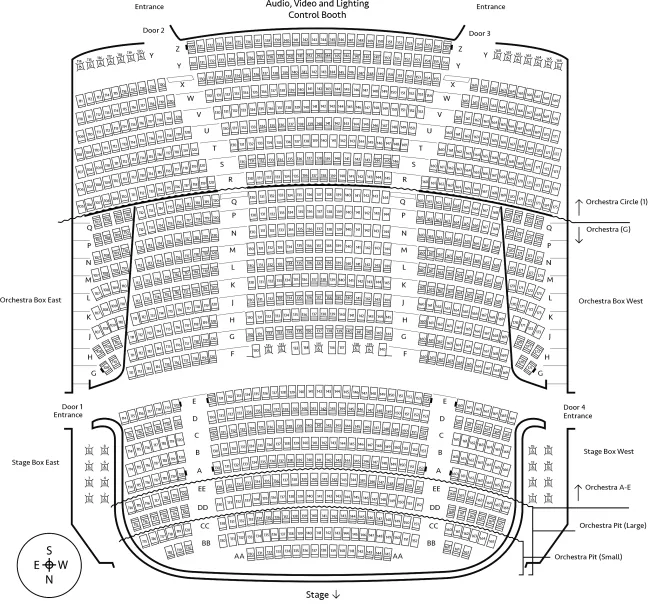
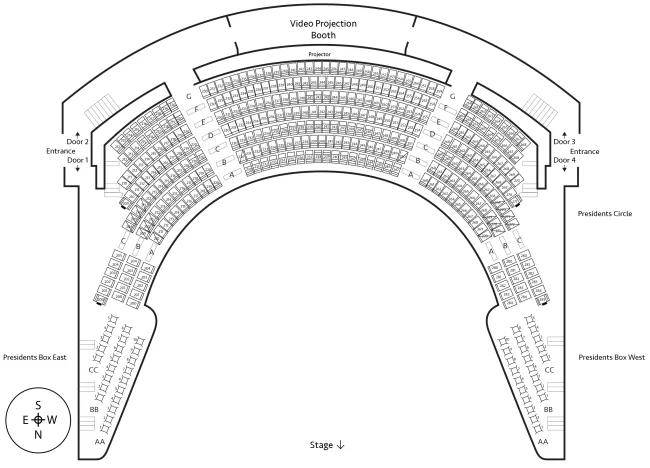
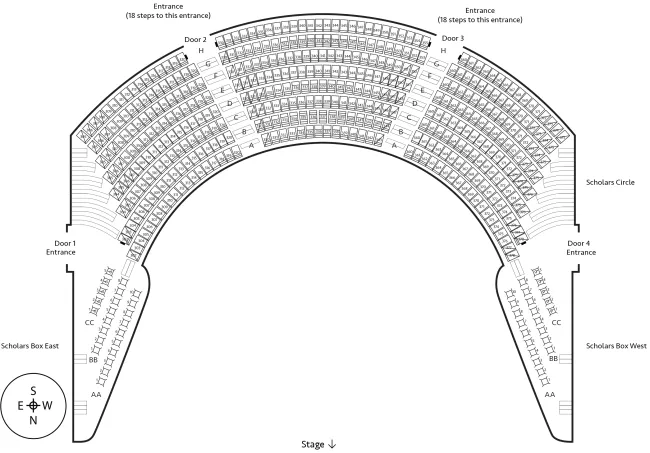
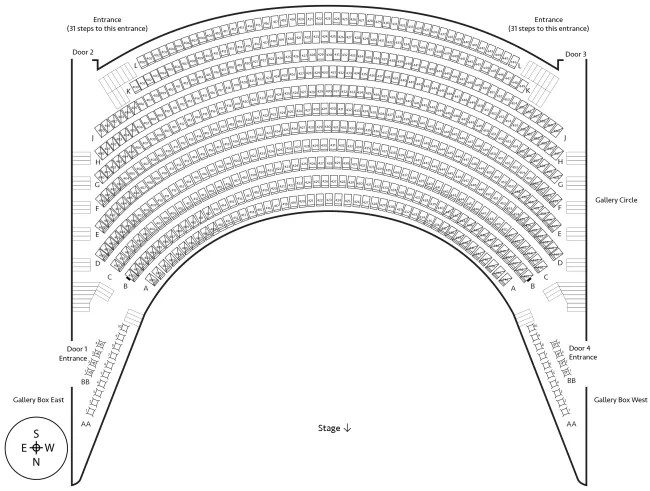
This in-person event is free with registration. Live captioning and ASL provided. For further questions about accessibility services and the venue, please email sutt0063@umn.edu or call 612-626-1528.
Presented by the Department of English and co-sponsored by the Loft Literary Center.
The recipient of a 2006 MacArthur Foundation Fellowship (“Genius” Award), George Saunders has authored two novels, four collections of short stories, a novella, a book of essays and an award-winning children’s book. His 2026 novel “Vigil” (Random House) takes place at the bedside of an oil company CEO, in the twilight hours of his life, as he is ferried from this world into the next; it has been praised as “a wise, playful, electric novel.”
Saunders's first novel, “Lincoln in the Bardo” (2017), won the Man Booker Prize and was a #1 New York Times bestseller. His most recent story collection, “Liberation Day” (2022), was also a New York Times bestseller. His collection “Tenth of December” was the winner of the 2014 Story Prize and the 2014 Folio Prize. His work appears regularly in The New Yorker, GQ and Harpers Magazine, and has appeared in the O’Henry, Best American Short Story, Best Non-Required Reading and Best American Travel Writing anthologies. Saunders is the recipient of a Guggenheim Fellowship, was named one of the 100 Most Influential People in the World by TIME Magazine in 2013 and received the 2025 Medal for Distinguished Contribution to American Letters (DCAL) from the National Book Foundation. He teaches in the Creative Writing Program at Syracuse University.
“For more than a decade, George Saunders has been the best short-story writer in English — not ‘one of,’ not ‘arguably,’ but the Best.” — Mary Karr for TIME Magazine
Julie Schumacher is the author of 12 book-length works of fiction, including the "Dear Committee Members” trilogy, the first volume of which won the Thurber Prize for American Humor. She is the first woman to have won the Thurber Prize. Her other works include “Patient, Female” and “An Explanation for Chaos,” both of them short story collections; “Doodling for Academics,” a satirical coloring book about higher education; and five novels for young readers. Her first published story, “Reunion,“ written to fulfill an undergraduate writing assignment at Oberlin College, was reprinted in “The Best American Short Stories 1983.” Subsequent stories and essays appeared in The Atlantic, The New York Times, The Chronicle of Higher Education, The American Scholar, The Wall Street Journal and in “Prize Stories: The O. Henry Awards.”
She is a Regents Professor in the UMN Department of English and directed the MFA program in Creative Writing for 13 years.
The Esther Freier literature series hosts two free lectures each year featuring various prize-winning authors. The literary legacy that Esther Freier envisioned began in 2001, when celebrated novelist and essayist Jamaica Kincaid inaugurated the Esther Freier Endowed Lecture in Literature series. A clinical laboratory chemist and professor, Freier had a deep and profound love for literature and the humanities. She wanted to leave a legacy that would benefit the public and inspire emerging authors. In her will, Freier created an endowment that would bring prize-winning national and international authors to campus for free, public lectures and informal visits with students.
Esther Freier was born in Hibbing, Minnesota in 1925. She moved to Minneapolis while still a child and spent her entire academic (BS ‘46, MS ‘56) and professional career of 45 years at the University of Minnesota. She co-authored the first paper dealing with quality control in clinical chemistry, winning several awards. When she retired in 1991, she held the only endowed professorship in medical technology in the nation. That year, Freier served as the first woman president of the Academy of Clinical and Laboratory Physicians and Scientists and was re-elected the following year. Esther Freier was a teacher, friend and mentor to many. The Department of English is deeply grateful for her generosity to us, the University and the community.
Check back for updated information closer to the event date. If you need assistance with your tickets, please call 612-624-2345, email umntix@umn.edu.
UMN Conversations at Northrop is a collection of lectures, panel discussions and other conversations focused on important and timely issues presented in collaboration among numerous University of Minnesota departments and held at Northrop.