Northrop and VocalEssence Present
WITNESS:
Symphony of Spirituals
2025–26 Northrop Season
Sun, Feb 22, 4:00 pm
WITNESS:
Symphony of Spirituals
2025–26 Northrop Season
Sun, Feb 22, 4:00 pm
Lift your voice and sing for justice as VocalEssence presents songs of resilience and resistance that inspire all to continue the march towards freedom and racial reconciliation. Hear the rhythmic cry for freedom found in The Justice Symphony by Damien Geter, echoing anthems from the Civil Rights Movement and accompanied by a live symphony orchestra. Experience the poignant and beautiful sounds of the Negro spiritual in the world-premiere performance of two newly commissioned works by the multi-talented composer B.E. Boykin. Embrace the unifying spirit of community!
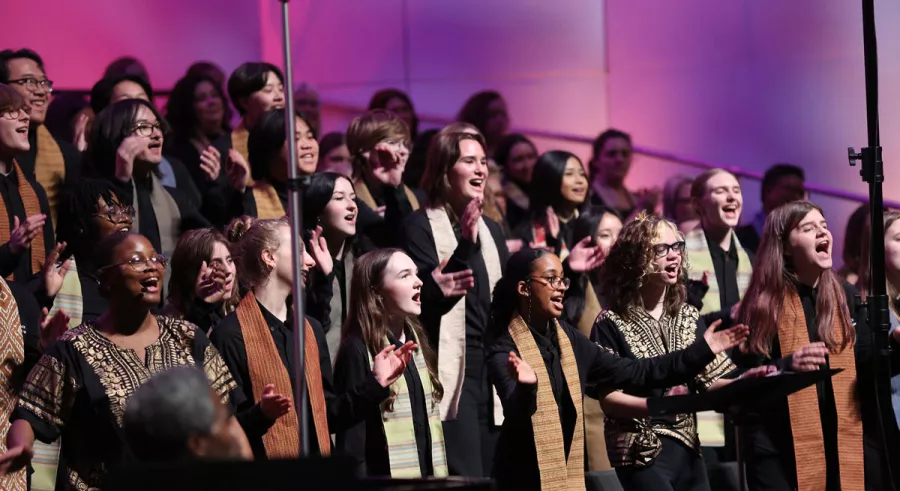
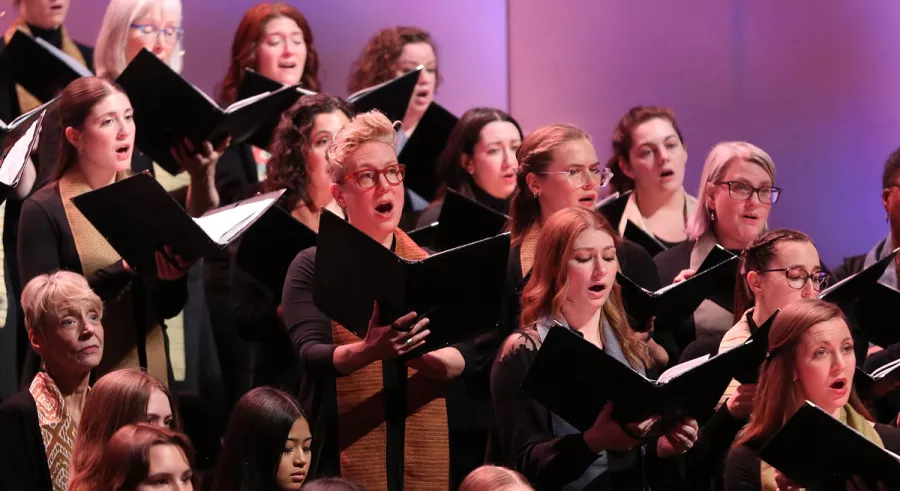
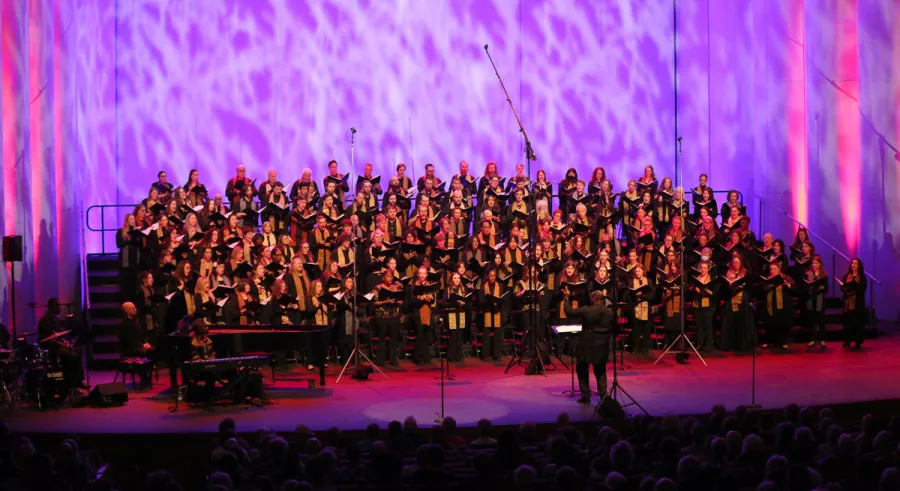
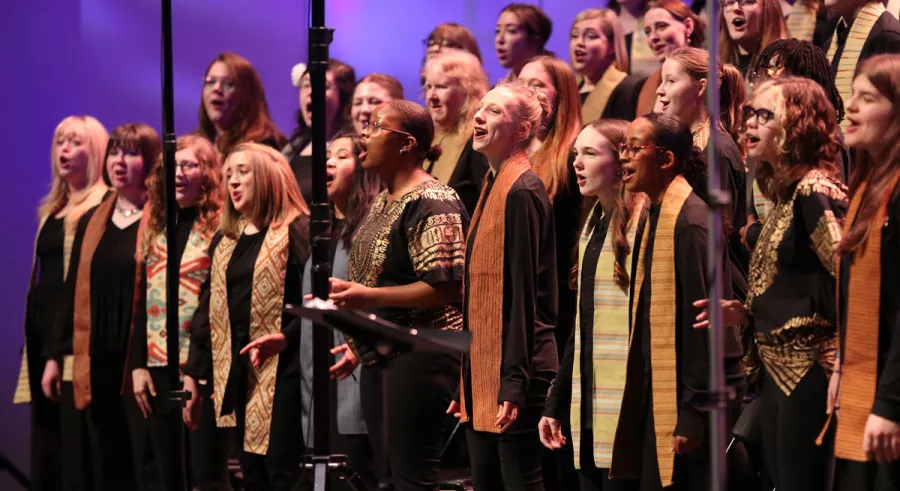
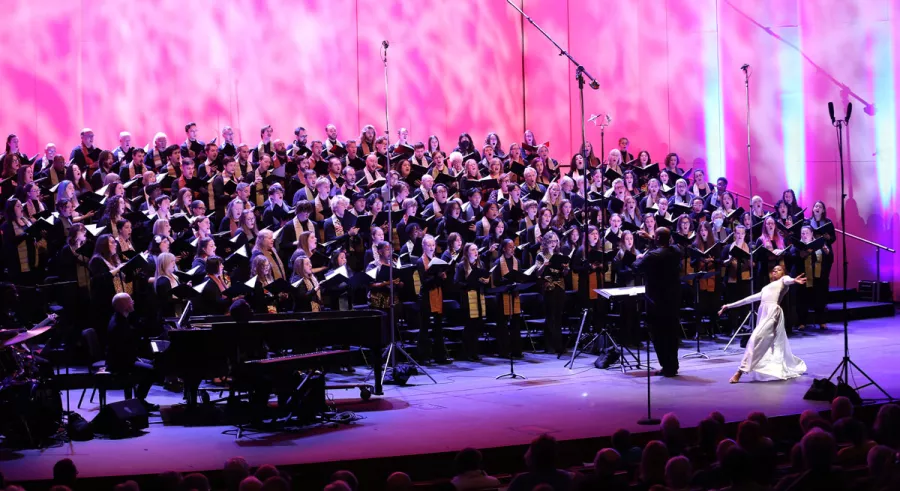
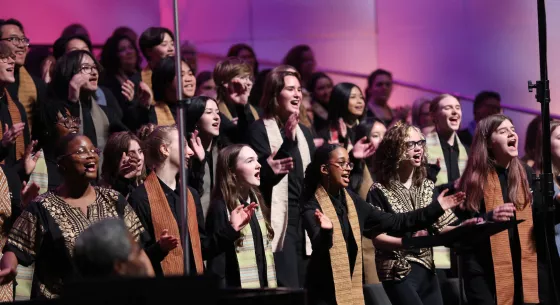
WITNESS: Symphony of Spirituals will feature the VocalEssence Chorus and Ensemble Singers, elder singers from the VocalEssence Vintage Voices, diverse teenage choir VocalEssence Singers Of This Age, and a symphony orchestra with G. Phillip Shoultz III conducting.
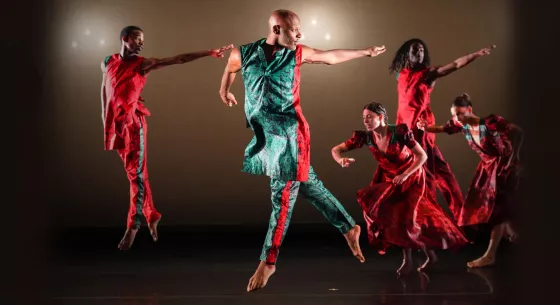
Top image: VocalEssence WITNESS. Photo © Kyndell Harkness.
“VocalEssence offers powerful ‘WITNESS: Eyes Still on the Prize’ concert at Northrop.”—Minnesota Star Tribune
“The most charismatic performers onstage were the youngest. Singers of This Age (or SOTA, for short) is a group of high school-age singers who throw themselves body and soul into their singing. They delivered a version of B.E. Boykin’s Stand Up! that earned its exclamation point.”—Minnesota Star Tribune
“A WITNESS concert is a beautiful thing, uplifting and inspiring.”—MinnPost
“VocalEssence, one of the Twin Cities’ premier singing ensembles, has shone a light on African-American musical genius and ingenuity through its WITNESS concert.”—Minnesota Star Tribune
Our flexible Create Your Own package lets you choose your experiences from any three or more in-person events from the 2025–26 Northrop Season! Subscribers enjoy:
*Some exclusions apply.
If you need assistance, please call 612-624-2345, email umntix@umn.edu.
The content below derives from the Northrop Across Campus Program that supports Northrop's mission towards intersections between performing arts and education for the benefit of all participants now and for generations to come.
Find ways to make thematic connections to these suggested topics:
Dive deeper with these resources that provide additional information about the performers, the history of the artform, and the artistic process.
VocalEssence WITNESS School Program website
VocalEssence Singers Of This Age website
"Review: VocalEssence Offers Powerful ‘Witness: Eyes Still On the Prize’ concert at Northrop"—The Minnesota Star Tribune
"Trailblazer Reatha Clark King on Her Journey From Chemistry to Philanthropy"—MPR News
"Minnesota’s First Lady of Civil Rights"—Connect Magazine by UMN College of Education and Human Development (CEHD)
"The Magic of Rose McGee’s Sweet Potato Comfort Pie Comes to a Children’s Book"—MPR News
Video: "Negro Spirituals: The Music That Helped Free Enslaved African Americans”—American Black Journal, Detroit PBS
Video: "Slave Songbook: Origin of the Negro Spiritual" PBS History Detectives
Video: "Damien Geter's Buh-Roke for Harpsichord and Strings Performed by Sound Salon"
Video: "Damien Geter: Composer, Singer, & Musical Guru"
Brittney Boykin | Kennedy Center
Start a conversation about the performance or encourage reflection, using these questions as inspiration.
Created in 1991 in partnership with former Executive Director of the General Mills Foundation, Reatha Clark King, VocalEssence WITNESS celebrates the contributions of African Americans to our shared American heritage. Through concerts, recordings, and school programs, WITNESS broadens ideas about African American musical expression by commissioning new works and performing rarely heard pieces by African American composers.
Separate from the public matinee, VocalEssence will perform two student matinees, WITNESS: Eyes Still on the Prize II, a call for continued social justice. This reference to the Civil Rights anthem under the same name will honor the legacies of three Minnesotan women and Civil Rights activists: Rose McGee, Josie Johnson, and Reatha Clark King. They have worked tirelessly for more than half a century to champion human rights and have fostered immense change through their respective career fields. McGee is an author, baker, entrepreneur, and community facilitator; Johnson is an educator, leader, and advocate for human rights policy; and Clark King is a chemist, business leader, and philanthropist.
WITNESS: Symphony of Spirituals, a separate program from the student matinees, will spotlight the legacy of Negro spirituals: songs of resilience and resistance that inspire us to continue the march toward freedom and racial reconciliation. Not only will the show feature anthems from the Civil Rights Era in The Justice Symphony by Damien Geter, it will also feature two newly commissioned works by current MN Opera resident composer, B.E. Boykin.
This activity is made possible by the voters of Minnesota through a Minnesota State Arts Board Operating Support grant, thanks to a legislative appropriation from the Arts and Cultural Heritage Fund.